About me

Strategic business and project developer working at the intersection of shipping infrastructure, heavy industry, and carbon management; currently building port and shipping infrastructure for CCS.

  1. What I’m working on
    1. Developing infrastructure
    2. Creating strategic tools
    3. Writing and speaking
  2. How I got here
    1. Background
  3. Contact
  4. Footnotes

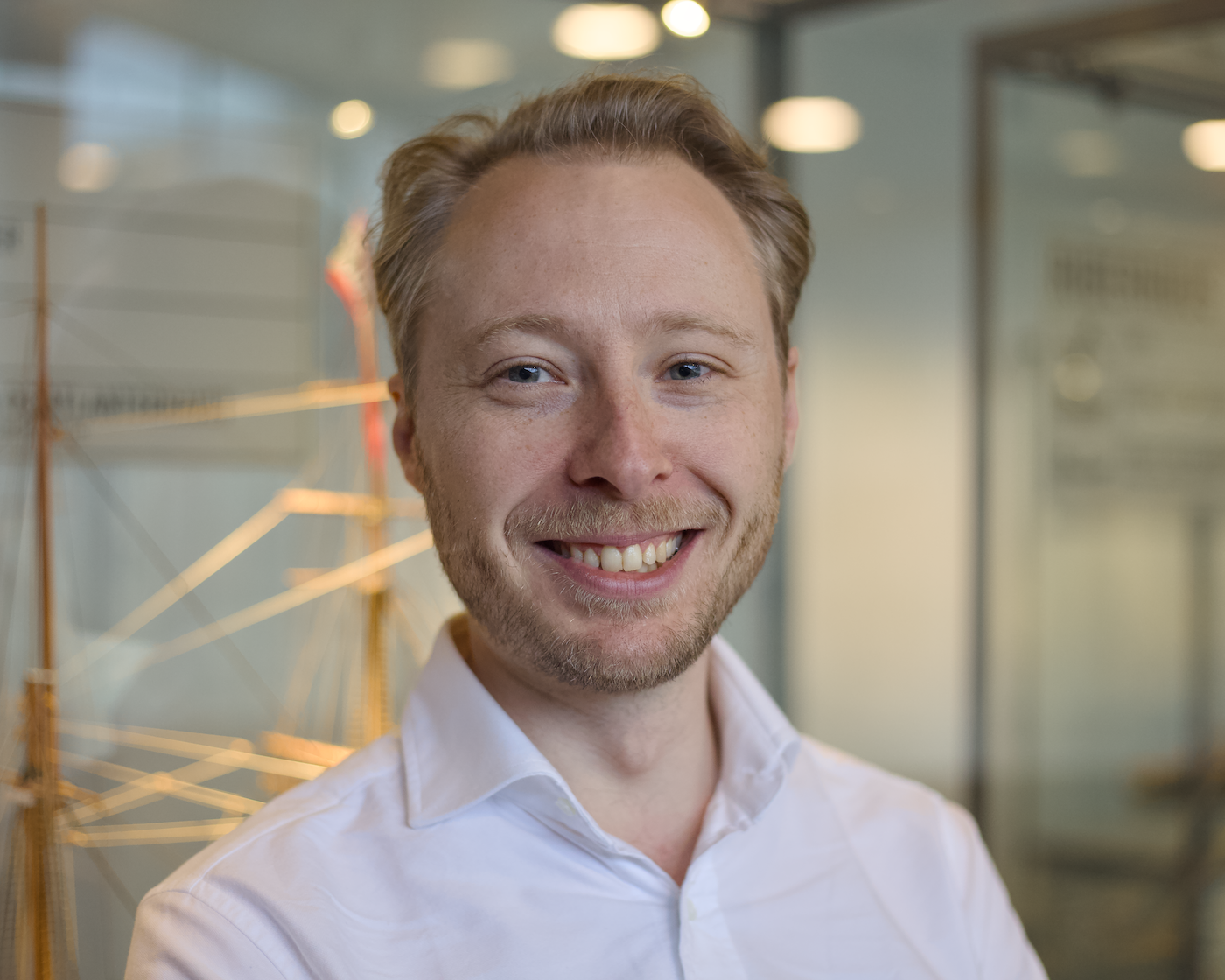
Hello, I’m Oliver T. Edwards. Industry and infrastructure runs in my family, not as tradition I’m upholding, but as a sort of compass that has deeply affected what challenges I find interesting and worth spending time on. The long version of this story starts with a camera, two grandfathers, and a photograph of the Norwegian king aboard a British warship. I’ve spent the better part of a decade between industrial markets, shipping infrastructure, and real estate development, usually working closely with senior teams on projects that take years to resolve. What can I say, I like a good challenge.

Most of the meaningful work I’ve done has come around through long-term relationships rather than job adverts. People I’ve worked with closely over time have pulled me into projects when those problems needed a particular combination of skills. I’ve found that a background spanning architecture, market analysis, software development, and commercial finance keeps finding new applications in new challenges. Either way, that’s how I ended up developing shipping infrastructure for industrial carbon management.

What I’m working on

Developing infrastructure

As a strategic 1 business and project developer in the management team at Normod Carbon, I basically translate complex industrial carbon capture needs into viable port and shipping infrastructure. My work spans the full development cycle: aggregating emitter volumes, market entry, site prospecting, feasibility modelling, engineering coordination, investor onboarding, and exclusivity negotiations.

Recent highlights include exclusivity agreements for CO₂ terminals in Denmark (Port of Grenaa, €250 million in planned investment) and Sweden, with ongoing projects across Northern Europe.

September 2025 press release in EnergyWatch: Normod Carbon signs an exclusive port development agreement for a new CO₂ terminal at the Port of Grenaa, Denmark, requiring investments of about €250 million.
Press release about Normod Carbon’s development agreement.

My interdisciplinary background has been essential here: architectural training for terminal concept and land development; corporate finance for feasibility and risk analysis; business development for market expansion and negotiation; software experience for cargo monitoring and autonomous terminal-vessel integration systems.

Creating strategic tools

Drawing on full-stack development experience since 2010, I prototype custom software solutions for industrial challenges. One of my best tools reduces industrial land development timelines by weeks or months by combining market intelligence, sales data, and geospatial analysis to support site selection and feasibility assessment. Currently internal to Normod Carbon, though I’m considering a public release.

Writing and speaking

Writing is how we think our way into a subject and make it our own. Writing enables us to find out what we know—and what we don't know—about whatever we're trying to learn.

William Zinsser

I write to build deeper intuition for difficult subjects. William Zinsser’s Writing to Learn helped me understand why writing has always been my primary tool for making sense of things. That’s why I maintain this website as a living document, publishing posts before they’re finished to invite feedback and increase their utility.

This practice eventually opened doors to speaking in international networks. I recently presented my analysis of why multi-fuel ships unlock CCS at scale to bankers, insurers, and policymakers in the Carbon Management Europe (formerly known as ZEP), the EU’s official advisor on industrial carbon management.

Speaking about multi-fuel shipping investments for CCS at Carbon Management Europe.

How I got here

It was from my own early experience that I decided there was no use to which money could be applied so productive of good to girls and boys who have good within them and ability and ambition to develop it as the founding of a public library.

Andrew Carnegie

The roles I’ve held might look a bit random on paper (market analyst, project architect, marketplace founder, head of design, infrastructure developer) but there is an internally consistent logic in the background. Each one has come through collaborations that have deepened over time and then opened new doors. So, my skills have accumulated in one area before finding a new application in the next one.

I co-founded Doyo Group with my brother Lucas P. Edwards in 2015, delivering market research and commercial development for companies in industrial, energy, and pharmaceutical sectors across Northern Europe; the Danish Foreign Ministry, Primagaz, Grundfos, Danfoss, Novo Nordisk, Alfa Laval. Six years of long-cycle B2B and B2G sales gave me a foundation in industrial market intelligence and perhaps the kind of patience that complex commercial relationships actually require.

We later returned to architecture, designing prominent public spaces in Norway: the transformation of Kommandantboligen at Falstadsenteret, praised by former Minister Gudmund Hernes for being “at the cutting edge of contemporary culture platform development”; Torshov Library, praised by Deputy Mayor Abdullah Alsabeehg for the commitment of the design process to prioritise community needs above all else; and harbour area redesigns around Sandvika near Oslo.

The architecture work deepened my instincts for how physical infrastructure gets built and what makes it fail, but I was increasingly drawn toward the commercial and development side of large projects. That pull temporarily led me into design and data-driven product development at Mood Communication (2021–2023), a subsidiary of one of Norway’s leading communications agencies, where I worked directly alongside the managing director on new business development and helped a key client grow annual revenue by 10% (50M NOK) over one or two years. Another peripheral collaboration that began before this period eventually brought me into Normod Carbon. The repeating pattern here is a working relationship deepens, a larger problem comes into view, and the skills fit.

In parallel, I co-founded Kinbo (2022–2025), a marketplace for green, community-focused new-build homes, delivering market demand insights and sales services to real estate developers, pension funds, and asset managers including AMBright Asset Management, Tækker Group, and Thybo Ejendomsudvikling. Since 2023 I’ve also served as international liaison at Proptech Norway, connecting founders, investors, and stakeholders across the real estate and infrastructure sectors; including co-hosting Proptech Summit 2023, Norway’s largest real estate technology conference.

Background

I hold a Master of Arts in Architecture from Aarhus School of Architecture (accredited by the Royal Institute of British Architects), focused on infrastructure and participatory design, with field studies and projects across the United States and India. 2 I later completed a specialisation in corporate finance at The University of Melbourne, covering corporate governance, capital markets, financial analysis, and risk management.

Contact

I’m particularly interested in conversations about shipping infrastructure, heavy industry, carbon management, energy, critical minerals, and market/investment advisory topics. Reach me on X (Twitter), LinkedIn, or subscribe to my newsletter for new posts. You can also submit feedback about my site.


  1. The “strategic” aspect means I focus not only on individual projects, but also on shaping long-term market strategies, building ecosystems, and positioning infrastructure initiatives for greater industry impact in shipping and heavy industry. ↩︎

  2. I travelled extensively across the United States and India to conduct field studies, design, manage, and construct projects in local contexts — to experience the dynamics of development firsthand. Each region has its own challenges, and I can tell you a lot of stories about managing supply chain issues in Southern India. ↩︎